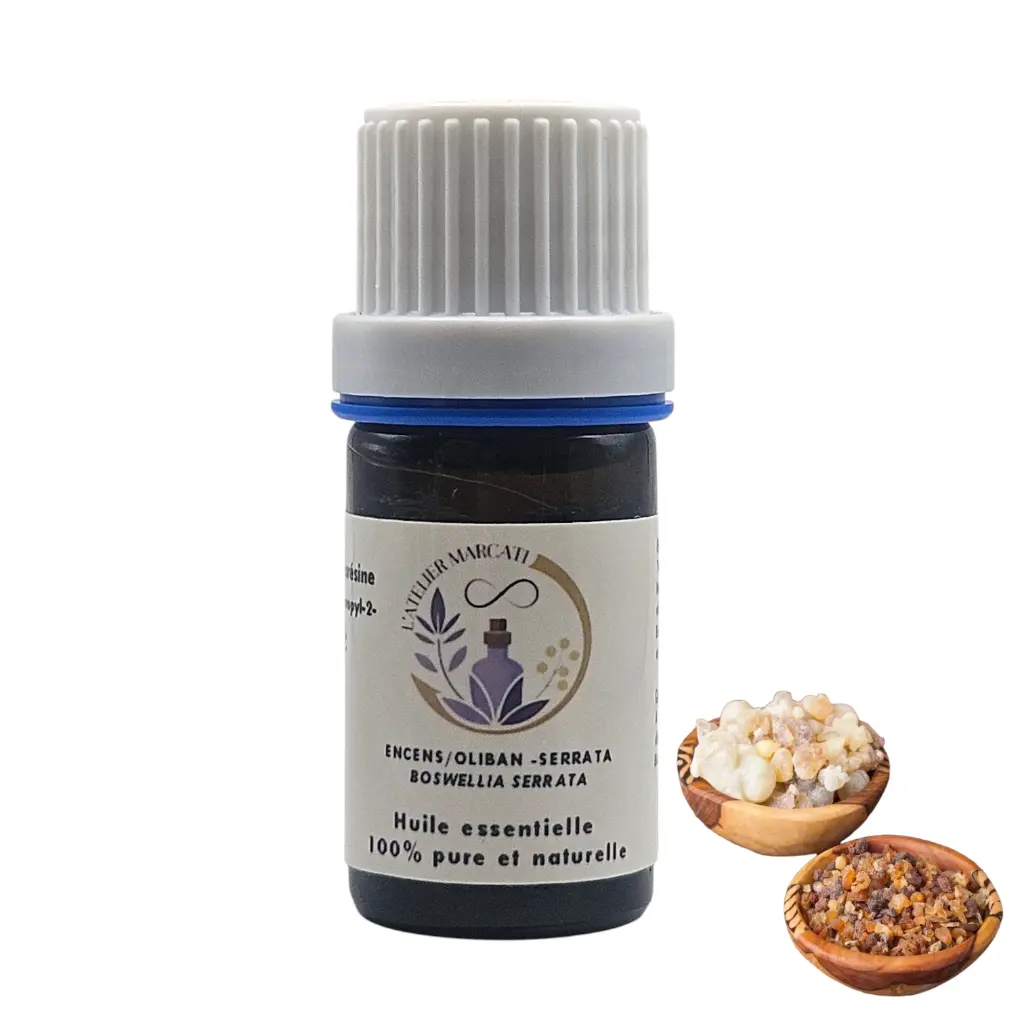
Chemotype and indications
Identity card
Name : Incense Oliban or Indian Incense or Oliban of India or Guggul
Botanical name: Boswellia serrata
Botanical family: Bureraceae
Biochemical composition:
- Ethers: Methyl Chavicol (=Estragol)
- Monoterpenes: Alpha Pinene, Alpha Thujane, Beta Myrcene, Limonene, P Cymene, Sabinene
- Sesquiterpenes: Beta Bourbonene
Physical, emotional properties and therapeutic indications
- On the physical level, GUGUL is recommended in Ayurvedic medicine as a universal remedy for regeneration and revitalization.
- It helps the soul to access a state of well-being, purifies the aura and dispels interferences that can occur during meditations and prayers.
- Due to its virtues, fumigations based on GUGGUL are therefore also recommended in cases of great nervousness, stress, insomnia and lack of dynamism.
Use in the evening when you have “time to relax”
Another Frankincense: Boswellia carterii from Somalia and the island of Socotra.
Boswellia Serrata and Carterii are: anti-inflammatory, and treat Crohn's disease (chronic inflammation of the intestines).
Additional information
Sacred Plant
GUGUL = “Indian incense”
In India, it is used for Ayurvedic medicine in various areas of care.
Mixed with other plants, it is ingested in the form of pills:
“NARAKA GUGGULU and TRIPHALA GUGGULU”
GUGGUL is sold in India as an Ayurvedic medicine called: SALLAKI to treat inflammatory polyarthritis. (This medicine exists in Switzerland under the name H15 AYURMEDICA).
Reference and bibliographic source: Lily BAYER and Dr Hervé STAUB, (2013) “In-depth treatise on Phyto and Aromatherapy”, Ed. Grancher. p. 499.
INDICATIONS IN AROMATHERAPY AND THE USE OF ESSENTIAL OILS DO NOT CONSTITUTE A MEDICAL DIAGNOSIS AND DO NOT REPLACE THE ADVICE OF A DOCTOR OR MEDICAL TREATMENT!