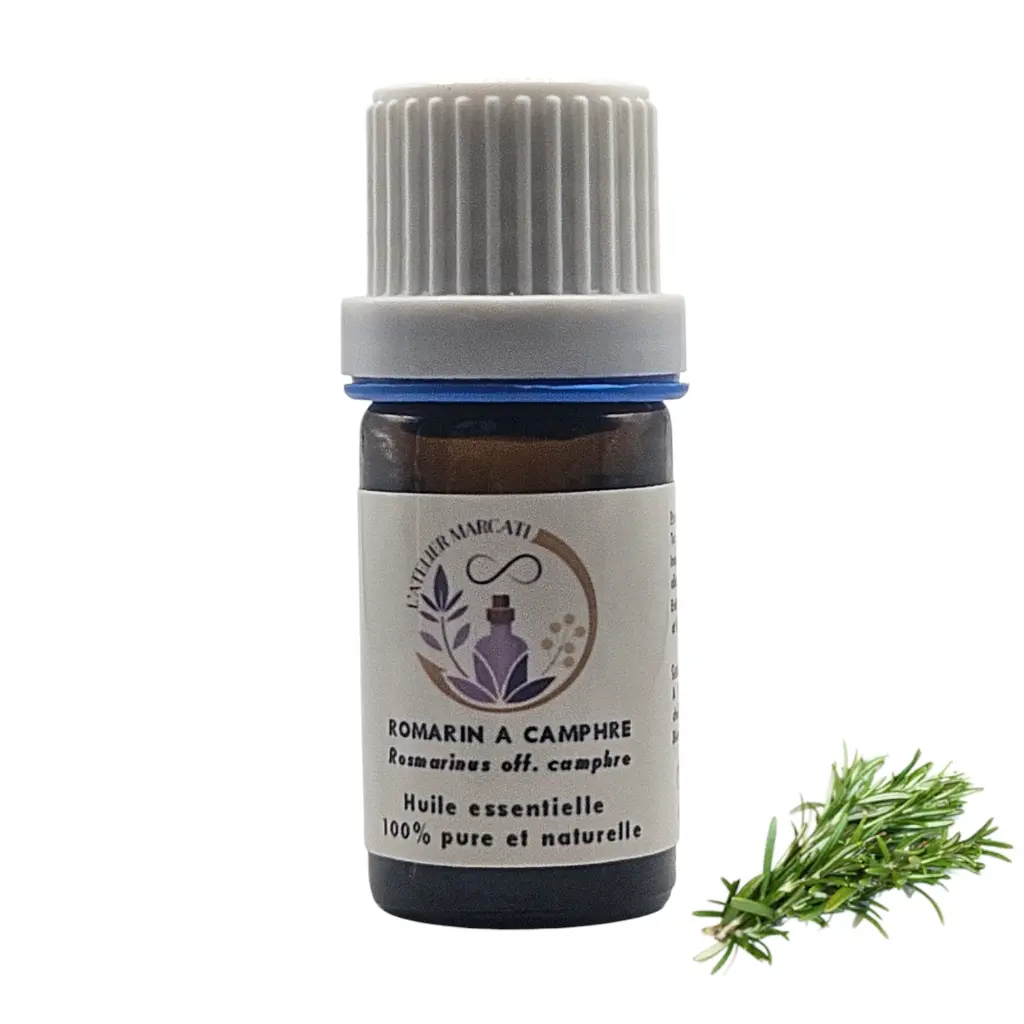
Chemotype and indications
Identity card
Name: Camphor Rosemary
Botanical name: Rosmarinus officinalis camphoriferum
Distilled part: Flowering plant
Botanical family: Lamiaceae
Origin: Spain
Chemical composition:
- Ketones: Borneone (30%), Carvone, Verbenone
- Esters
- Monoterpenes (40%): Alpha-Pinene (12%) and Beta-Pinene (22%), Alpha and Gamma Theroine, Beta Phellandrene, Camphor, Cis and Trans Thuyanol, Limonene, Mycene, P. Cymene
- Monoterpenols: Alpha Terpineol, =borneol, Linalool, Terpinene 4 ol
- Oxides: 1.8 Cineole (30%)
- Sesquiterpenes: Beta Caryophyllene
Physical properties and therapeutic indications
- Cardiotonic*
- Cholagogue*
- Chronic cholecystitis°
- Muscle aches*, Muscle soreness*, Cramp*
- Emmenagogue (non-hormonal)
- Cerebral hypertension*
- Mucolytic*
- Myalgia*
- Muscular rheumatism*
- Brain pressure*
- Heart palpitations*
Emotional, psychological properties and therapeutic indications
- Relaxant
- Nervous disorders
- Heart problems (of nervous origin)
- Depression
- Nerve tonic and brain stimulant
- Promotes concentration and memory loss
Additional information
Prohibited for: pregnant women, babies, children, hypertensives, epileptics
Danger: Dermocaustic, Abortive, Neurotoxic
Toxic EO at high doses: "camphor, found in rosemary in various proportions depending on the chemotype, becomes lethal between 0.005 g and 0.5 g/kg" (p. 57)
Legend: * powerful, ** very powerful; *** extremely powerful (power value for the associated pathology)
Reference and bibliographic source: Lily BAYER and Dr Hervé STAUB, (2013) "In-depth Treatise on Phyto and Aromatherapy", Ed. Grancher. p.634.
THE INDICATIONS IN AROMATHERAPY AND THE USE OF ESSENTIAL OILS DO NOT CONSTITUTE A MEDICAL DIAGNOSIS AND DO NOT REPLACE THE ADVICE OF A DOCTOR OR MEDICAL TREATMENTS!