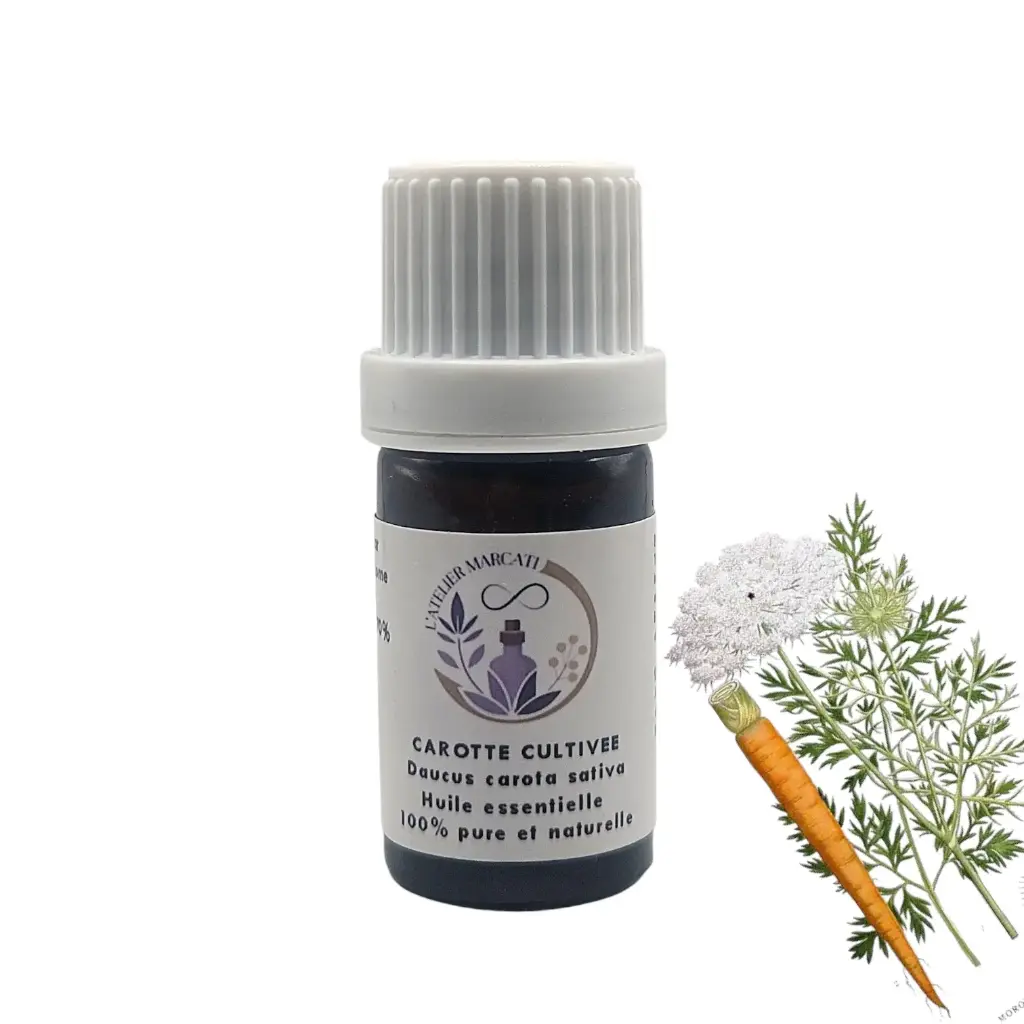
Chemotype and indications
Identity card
Name: Cultivated Carrot
Botanical name: Daucus carota sativa
Distilled part: Seed
Botanical family: Apiaceae
Origin:
Physical properties and therapeutic indications:
- Cholesterol*
- Cirrhosis*
- Rosacea*
- Liver-renal depurative*
- Detoxifying*
- Viral hepatitis*
- Liver regenerator**
- Pancreatic regenerator**
- Kidney Regenerator**
- Circulatory stimulant*
- Liver stimulant**
- Renal stimulant*
Additional information
MISCELLANEOUS:
For bedsores: 1 drop of Bay Laurel + 1 drop of Frankincense (Carterii) + 1 drop of carrot
Apply: 1 to several drops of the mixture 2 to 3 times/day depending on the severity of the case
Dangers / Directions for use:
Use for a short period of time
Helps with bowel function if the problem is liver related.
Do not use another essential oil in synergy for the same purpose.
Legend: * powerful,** very powerful;*** extremely powerful (power value for associated pathology)
Reference and bibliographic source: Lily BAYER and Dr Hervé STAUB, (2013) "In-depth treatise on Phyto and Aromatherapy", Ed. Grancher. p. 471
INDICATIONS IN AROMATHERAPY AND THE USE OF ESSENTIAL OILS DO NOT CONSTITUTE A MEDICAL DIAGNOSIS AND DO NOT REPLACE THE ADVICE OF A DOCTOR OR MEDICAL TREATMENTS!
Emotional, psychological properties and therapeutic indications:
- Stimulating
- Stress
- Internal instability
- Neurasthenia
- Tranquilizer
Chemical composition
- Esters: Geranyl Acetate
- Monoterpenes: Alpha and Beta Pinene, Sabinene
- Monoterpenols: Geraniol, Terpineol
- Phenol Methyl Ethers
- Sesquiterpenes: Beta Bisabolene
- Sesquiterpenols: Carotol (50 to 70%)